
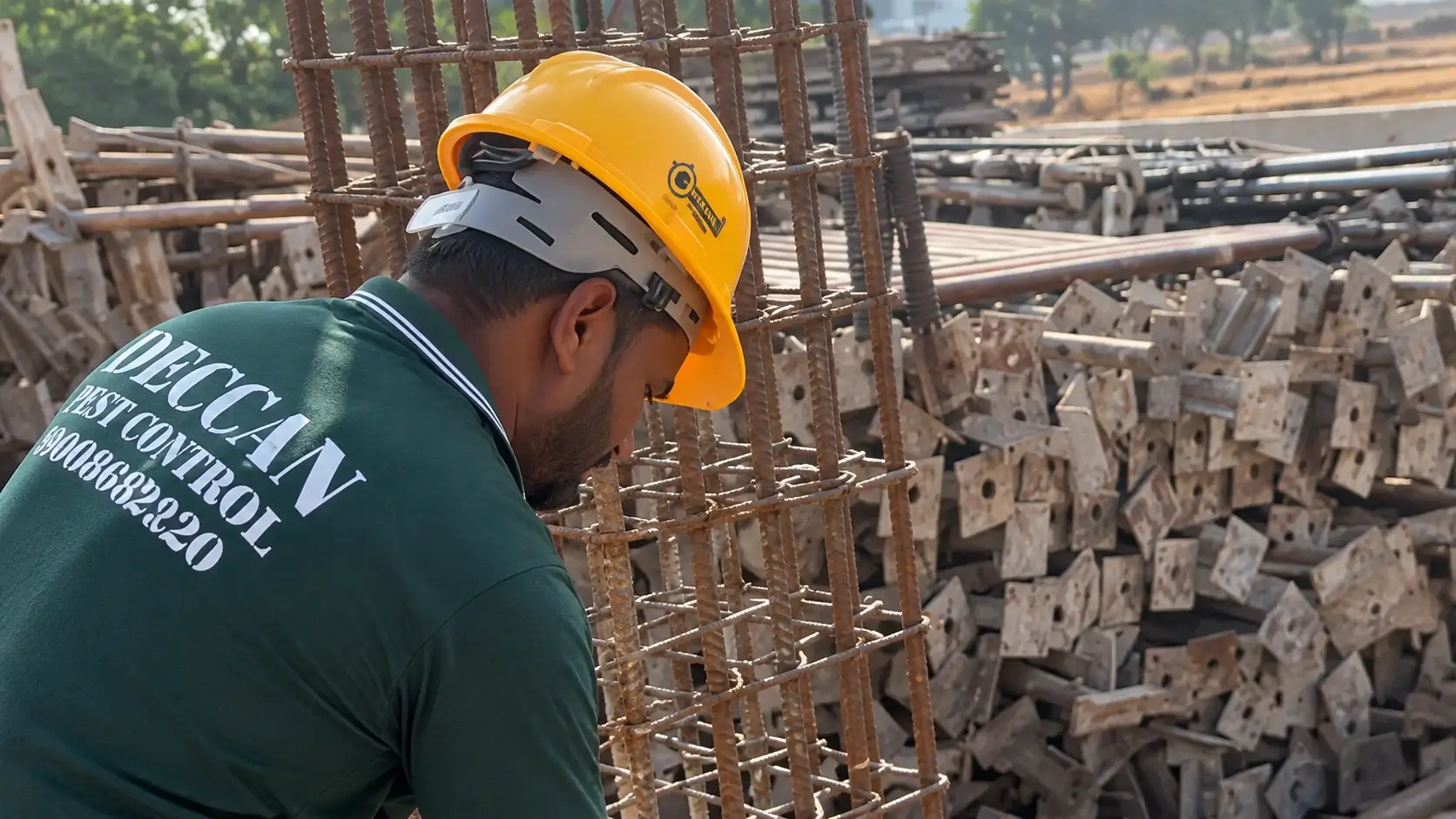
Quick answer: Pre-construction termite treatment is applied to the soil and foundation before a building is constructed, and is meant for new construction only. Post-construction treatment is applied to an existing, already-built structure — through drilling and chemical injection — and is used when a property is showing termite activity or was never treated during construction. If your home isn’t built yet, you need pre-construction treatment. If it’s already standing, you need post-construction treatment.
Most homeowners in Hyderabad only learn the difference when it’s too late — either they skipped pre-construction treatment during a build, or they assume post-construction treatment alone can replace a proper foundation barrier. Here’s how to tell which one applies to you, and why the distinction matters more than most people realize.
What Is Pre-Construction Termite Treatment?
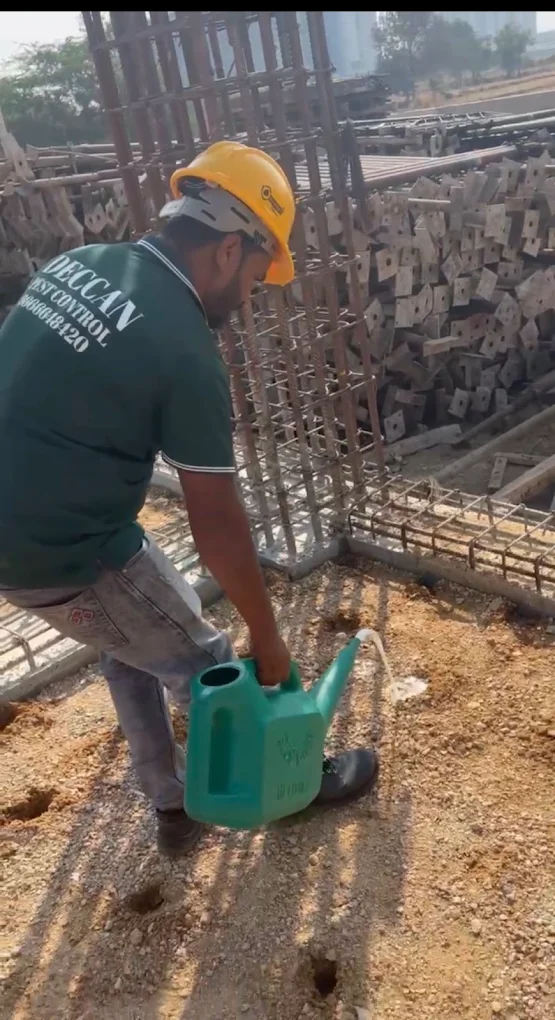
Pre-construction anti-termite treatment is a chemical soil treatment applied during the construction phase — before flooring, plinth beams, or foundation work are completed. It creates a continuous chemical barrier in the soil around and beneath the structure, so termites can’t tunnel up from the ground into the building once it’s finished.
It’s applied at specific stages:
- Before the foundation trench is filled
- Around the plinth (the base of the structure, at ground level)
- Along the perimeter of the building, before backfilling
- Around pipe and cable entry points, where termites commonly find gaps
Why it matters: this is the only stage where a full, unbroken soil barrier is possible. Once the building is complete, that barrier can only be recreated in sections — which is exactly what post-construction treatment does.
We treat quite a few new builds in Gachibowli, where the pace of construction means developers and individual owners alike often want this done correctly the first time, since redoing it later means drilling through finished walls and flooring.
What Is Post-Construction Termite Treatment?
Post-construction treatment is for buildings that are already standing — whether termite activity has been spotted or the property was never treated during construction. Since the soil barrier can’t be laid in one continuous layer anymore, treatment is done through:
- Drilling small holes into affected walls, flooring, and foundations
- Injecting anti-termite chemicals directly into the drilled points
- Treating soil around the external perimeter of the building where accessible
- Sealing entry points termites use to move between soil and structure
Why it matters: this method treats termites where they already are, but it depends on the technician finding every active entry point — which is harder in a finished building than in open soil.
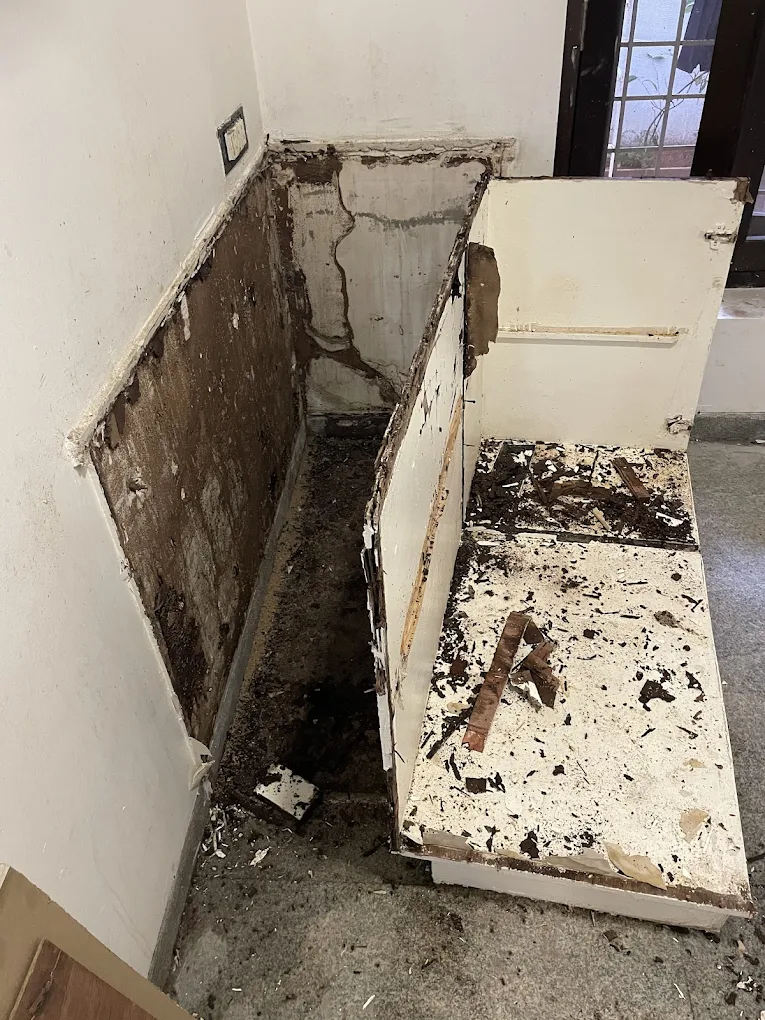
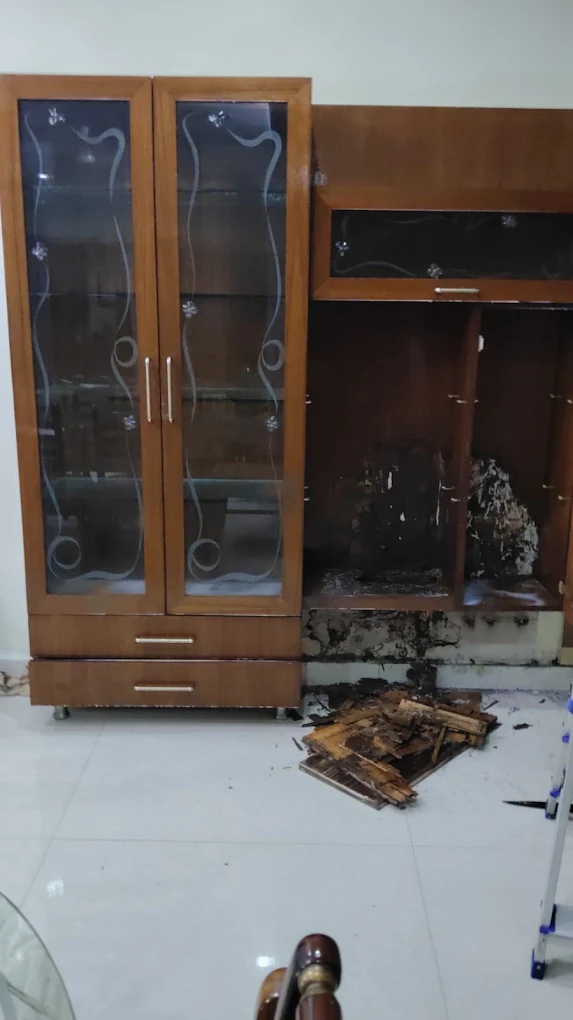
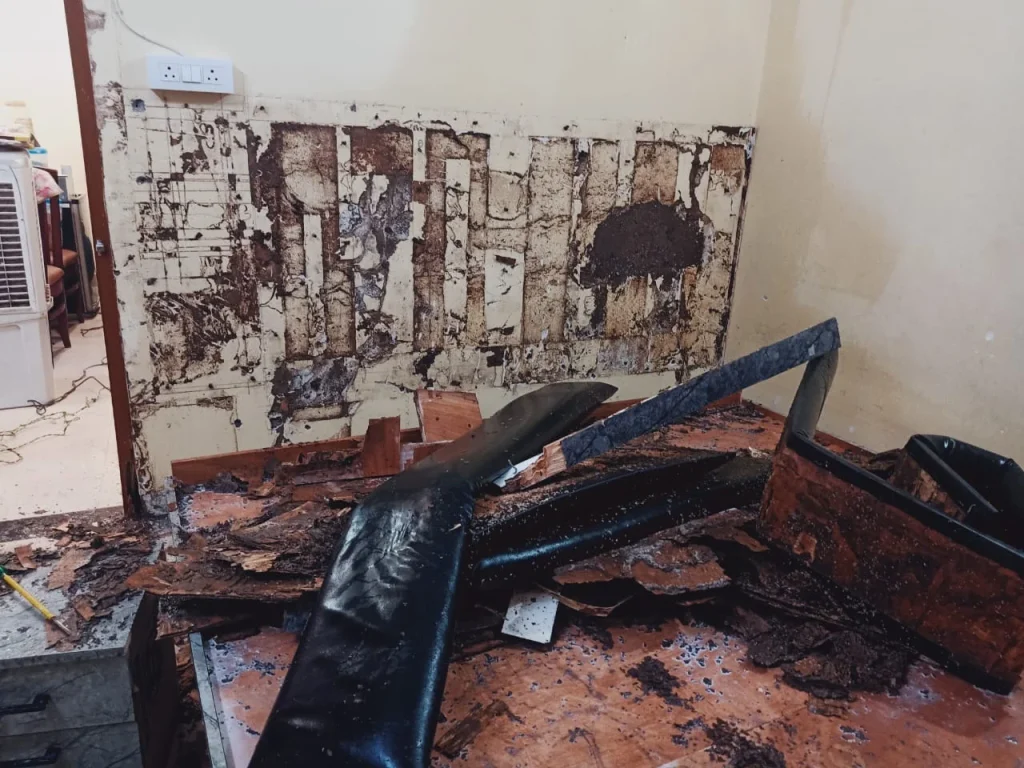
We’ve handled cases where the damage was already extensive by the time we were called — wardrobes and cupboards hollowed out from the inside, with the wood breaking apart in layers once opened up. This is what post-construction treatment is usually walking into: not prevention, but active damage control.
Pre-Construction vs Post-Construction: Side-by-Side Comparison
| Pre-Construction Treatment | Post-Construction Treatment | |
|---|---|---|
| When applied | During construction, before flooring | After construction is complete |
| Method | Continuous soil barrier | Drilling and chemical injection |
| Best for | New builds, villas, independent houses | Existing homes, apartments, resale properties |
| Coverage | Full foundation perimeter | Accessible walls, floors, entry points |
| Typical warranty | Up to 8 years | 5 years |
| Chemical used | Termiticide soil treatment | Bayer Premise and similar approved termiticides |
Which Termite Treatment Does Your Property Need?
If you’re building a new home in Hyderabad — anywhere from Gachibowli to Uppal to Kondapur — pre-construction treatment is worth doing regardless of soil type, because Hyderabad’s warm climate and seasonal moisture make it easy for termite colonies to establish themselves once construction is done. Skipping this step is one of the most common — and most expensive — mistakes builders and owners make.
If you’re buying a resale flat, already live in a built structure, or have started noticing signs of termite activity — mud tubes, hollow-sounding wood, discarded wings — post-construction treatment is what applies to you. (If you’re not sure whether what you’re seeing is actually termite activity, our guide on identifying termite infestation signs can help you confirm it first.)
This applies even if you’re managing the property remotely. One of our recent clients, an NRI coordinating termite treatment for her flat from abroad, mentioned how important it was that the process was handled professionally without her needing to be physically present — our team inspected, explained the process, and completed the work while keeping her updated throughout.
If your home was pre-construction treated years ago but you’re now seeing activity, it doesn’t mean the original treatment failed outright — soil barriers can be broken by later construction work, plumbing repairs, or landscaping that disturbs the treated soil. In this case, post-construction treatment is used to patch the gap, not replace the original barrier.
Can You Do Pre-Construction & Post-Construction Termite Treatment?
Yes — and for high-value or larger properties, it’s common. A property that received pre-construction treatment can still develop localized termite activity years later if the barrier is disturbed. Post-construction spot treatment addresses that specific area without needing to redo the entire foundation barrier.
Get the Right Treatment for Your Property
Choosing between pre-construction and post-construction treatment isn’t really a choice — it’s determined by whether your property is built yet. What is a choice is who you trust to do it right, since a poorly applied soil barrier or incomplete drilling pattern defeats the purpose either way.
Deccan Pest Control has provided both pre-construction and post-construction termite treatment across Hyderabad since 2002, backed by a track record our customers speak to directly:
“I recently took termite pest control service from Deccan Pest Control in Hyderabad and had a very good experience. The team did a proper inspection before starting the treatment and clearly explained the process… They used Bayer Premise pesticide and provided a 5-year warranty, which gives good confidence about the quality of service.” — Shailesh Sharma, Google review
Also read: How to Identify Termite Infestation in Hyderabad Homes & Termite Treatment for Home in Hyderabad
Anti Termite Piping System in Hyderabad — if you want a maintenance-friendly system with ongoing access points instead of one-time drilling
Call us for a free termite inspection
Frequently Asked Questions
It isn’t legally mandatory for most residential construction, but it’s strongly recommended given local soil and climate conditions, and many builders include it as standard practice.
It can significantly reduce termite risk, but it can’t recreate the same continuous, uninterrupted soil barrier that pre-construction treatment provides. It’s the next best option, not a full equivalent.
Pre-construction treatment typically carries a warranty of up to 8 years, since the barrier is applied as one continuous layer. Post-construction treatment typically carries a 5-year warranty, since it targets specific entry points rather than the full perimeter.
Deccan Pest Control uses Bayer Premise and other approved termiticides for both pre-construction and post-construction treatment, applied by trained technicians.
Yes — the builder typically arranges this before handover. If you’re buying resale or your building predates widespread pre-construction treatment practices, post-construction treatment for your specific unit is the relevant option.